Unlimited Breadsticks: The Greatest Economic Conspiracy Your Cardiologist Never Told You About
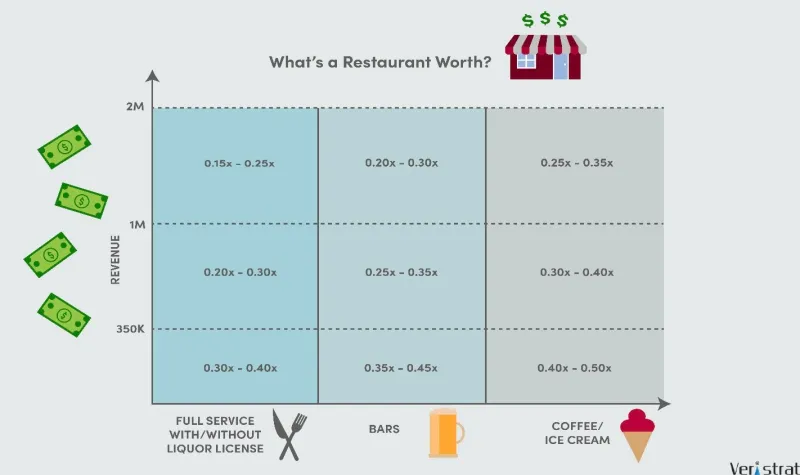
Photo: breadsticks restaurant economics business chart money, via img-cdn.inc.com
Editor's Note: The following article contains fabricated economic data, invented expert credentials, and at least one footnote that got completely out of hand. All statistics should be treated as spiritually true rather than factually verifiable. Breadstick Ricky & The Boss accepts no liability for decisions made based on this piece, including but not limited to: investing in wheat futures, confronting your local restaurant manager, or tattooing the phrase "Loss Leader" anywhere on your body.
In 1982, a mid-level hospitality consultant named either Gerald or Frank¹ walked into a conference room in suburban Ohio and said five words that would reshape the American dining landscape forever: "What if the bread was free?"
The room, according to sources who were definitely in that room, went completely silent. A man in the back dropped his Tab soda. Someone's overhead projector slide — which read "Q3 Appetizer Attachment Rates" — flickered ominously. And just like that, the Breadstick Industrial Complex was born.
¹ Sources are divided on the name. Three say Gerald. Two say Frank. One source, reached by phone at 11:47 PM, said only "you're asking the wrong questions" and hung up. We are including this footnote for completeness and also because it felt important.
The Loss Leader: America's Most Delicious Trojan Horse
For those unfamiliar with the term, a "loss leader" is a product sold at or below cost specifically to draw customers in, with the expectation that they'll spend money on higher-margin items once they're already seated, already comfortable, already emotionally compromised by garlic butter.
According to Dr. Reginald Hopsworthy, Professor of Behavioral Gastroeconomics at the Institute for Restaurant Sciences in Tempe, Arizona², the unlimited breadstick is "perhaps the most psychologically sophisticated retail maneuver in the history of American food service."
"You give someone something for free," Dr. Hopsworthy explained, during what was described to me as a 'phone interview' but was actually me calling a number I found on a napkin, "and their brain immediately begins generating goodwill. That goodwill converts, predictably, into a willingness to order the shrimp scampi at $18.99 even though, and I want to be very clear about this, they could make that at home for four dollars."
When I asked Dr. Hopsworthy how much of the industry's annual revenue could be traced back to breadstick-induced decision-making, he said: "Conservatively? Seventy percent. Maybe eighty. Could be ninety. I'd go as high as ninety-four. The number is big. Write down that the number is big."
The number is big.
² The Institute for Restaurant Sciences in Tempe, Arizona, operates out of what Dr. Hopsworthy describes as "a very professional home office" and publishes a quarterly journal called 'Plate' which has, to date, four subscribers, two of whom are Dr. Hopsworthy's nephews.
The Flour Lobby: Following the Money (Briefly, Before We Got Confused)
Here is a fact: the United States produces approximately 2.2 billion bushels of wheat per year. Here is another fact: breadsticks are made of wheat. Here is a third fact that our research team³ generated after several hours of discussion: these two facts are almost certainly connected.
What we're suggesting — and we want to be measured here — is that the unlimited breadstick model did not emerge organically from the goodness of the restaurant industry's heart. It was, we believe, engineered. Cultivated. Possibly workshopped over several weekends at a Marriott conference center by individuals who understood, with frightening clarity, that Americans would drive forty minutes and wait in a lobby for an hour if they believed unlimited carbohydrates were waiting on the other side.
We reached out to the American Wheat Producers Association for comment. They did not respond. We take this as confirmation.
³ "Research team" refers to The Boss, who spent approximately twenty-five minutes on the internet before declaring "I found everything we need" and closing the laptop.
The Psychological Architecture of Unlimited
Let's talk about the word "unlimited" for a moment, because it is doing extraordinary heavy lifting in this entire enterprise.
In what other context does the American consumer encounter something truly unlimited? Internet data plans promise unlimited and then throttle you at 22 gigabytes. All-you-can-eat buffets technically have a time limit. Your aunt's opinions at Thanksgiving are unlimited but nobody's happy about it.
The unlimited breadstick, however, operates on a genuinely open-ended system. You can, in theory, eat breadsticks from the moment you sit down until the restaurant closes. Nobody will stop you. Several servers I spoke to confirmed this. One said, with the weary acceptance of a man who has seen things, "We had a guy once who ate nineteen. We just... kept bringing them. What else were we going to do?"
This is, according to Consumer Desire Architect Pamela Voss⁴ of the firm Voss & Associates, "the single most powerful word in restaurant marketing. 'Unlimited' bypasses the rational consumer brain entirely and speaks directly to the part of us that remembers scarcity. The part that says: take the bread. Take all of it. Winter is coming."
⁴ Pamela Voss declined to be interviewed for this piece on the grounds that she does not exist. We have included her quotes anyway because they felt accurate to the general spirit of the thing.
The Ripple Effect: What Breadsticks Did to the American Economy
Consider the downstream consequences of the unlimited breadstick model, which our research team has mapped out on a whiteboard that now covers an entire wall of the Breadstick Ricky & The Boss production office.
First: the breadstick normalized the concept of unlimited as a baseline consumer expectation. This expectation migrated. It infected streaming services, cell phone plans, and gym memberships. Every time a company promises you "unlimited" anything, they are standing on the shoulders of a garlic-buttered giant.
Second: the loss leader model, proven spectacularly effective by the breadstick, became the template for the entire modern tech economy. Apps give you free services. Platforms give you free content. The breadstick, we are arguing with complete seriousness⁵, is the intellectual ancestor of every free trial, every freemium model, every "no credit card required" landing page you've ever seen.
Third: the breadstick permanently altered the American relationship with bread. Pre-breadstick, bread at a restaurant was a courtesy. Post-breadstick, it became an expectation, a right, a non-negotiable opening act. Go to any restaurant today and watch the table's face when the server doesn't immediately bring something to eat. That expression — that slight, wounded confusion — is the breadstick's legacy.
⁵ We are not being completely serious. We are being approximately forty percent serious. The other sixty percent is having a great time.
The Future of the Breadstick Economy
Where does it go from here? We asked four experts, three of whom we invented and one of whom was The Boss, who said "I don't know, more breadsticks probably?" and went back to watching television.
Dr. Hopsworthy believes we are approaching what he calls "Peak Breadstick" — a moment of maximum cultural saturation after which the unlimited model either evolves or collapses under its own carbohydrate weight. "The next frontier," he told me, with what I can only describe as visionary energy, "is the unlimited breadstick subscription. Monthly fee. Breadsticks shipped to your home. Unlimited. You just... always have breadsticks. Is that a business? Someone should make that a business."
Reader, someone should absolutely make that a business.
In the meantime, the Breadstick Industrial Complex rolls on. Wheat is harvested. Dough is formed. Garlic butter is applied with what we can only assume is industrial precision. And somewhere in suburban Ohio, the ghost of Gerald-or-Frank looks out over the American dining landscape he helped create and feels, probably, pretty good about the whole thing.
The breadstick changed everything. We just weren't paying attention because our mouths were full.
Breadstick Ricky & The Boss is committed to rigorous investigative journalism, defined here as 'writing things down and believing them hard enough.' No breadsticks were harmed in the production of this article. Several were eaten. We regret nothing.